"Without entering the tiger's den, you cannot get the tiger's cub."
Advertising cannot win over a foreign market without first immersing itself in the culture. This is the international advertising strategy we built for Fairfield by Marriott in Japan.
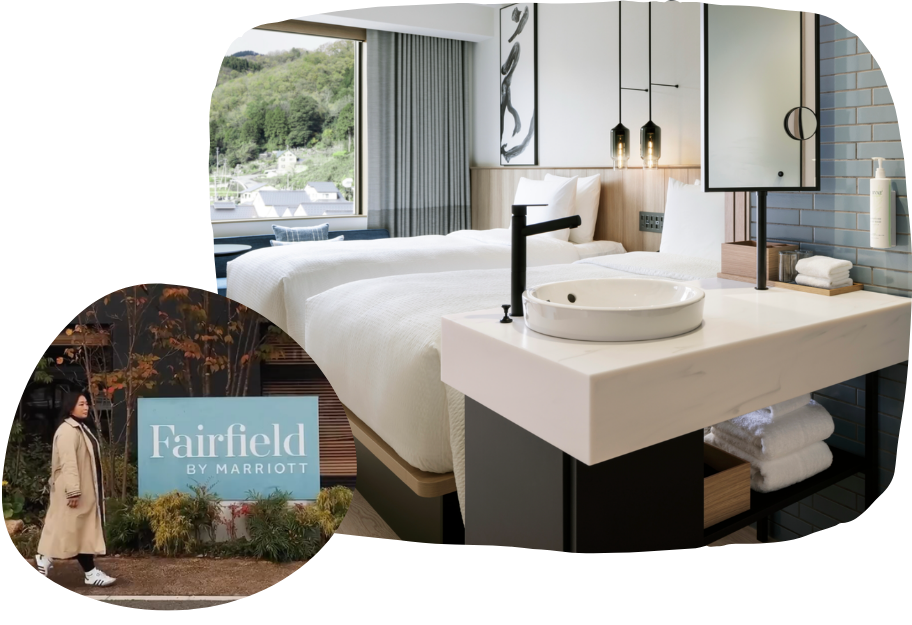
*Fairfield by Marriott is a mid-scale hotel brand under Marriott International with 31 locations across Japan. This international advertising strategy was developed as a group project for COM4040 at Appalachian State University, with the goal of building cultural relevance among Japanese domestic travelers.
OVERVIEW
Fairfield by Marriott is one of 30 brands under Marriott International's global portfolio.
In Japan, Fairfield operates 31 locations, many recently expanded into rural areas near Michi-no-Eki roadside stations to promote local culture and restorative travel experiences. Each property offers efficient room layouts, flexible social spaces, local snacks and drinks, and curated guides to nearby experiences.
Despite this footprint, Fairfield had a visibility problem. Japanese domestic travelers weren't choosing it. Not because the product was bad, but because the brand had no cultural identity they could connect with.
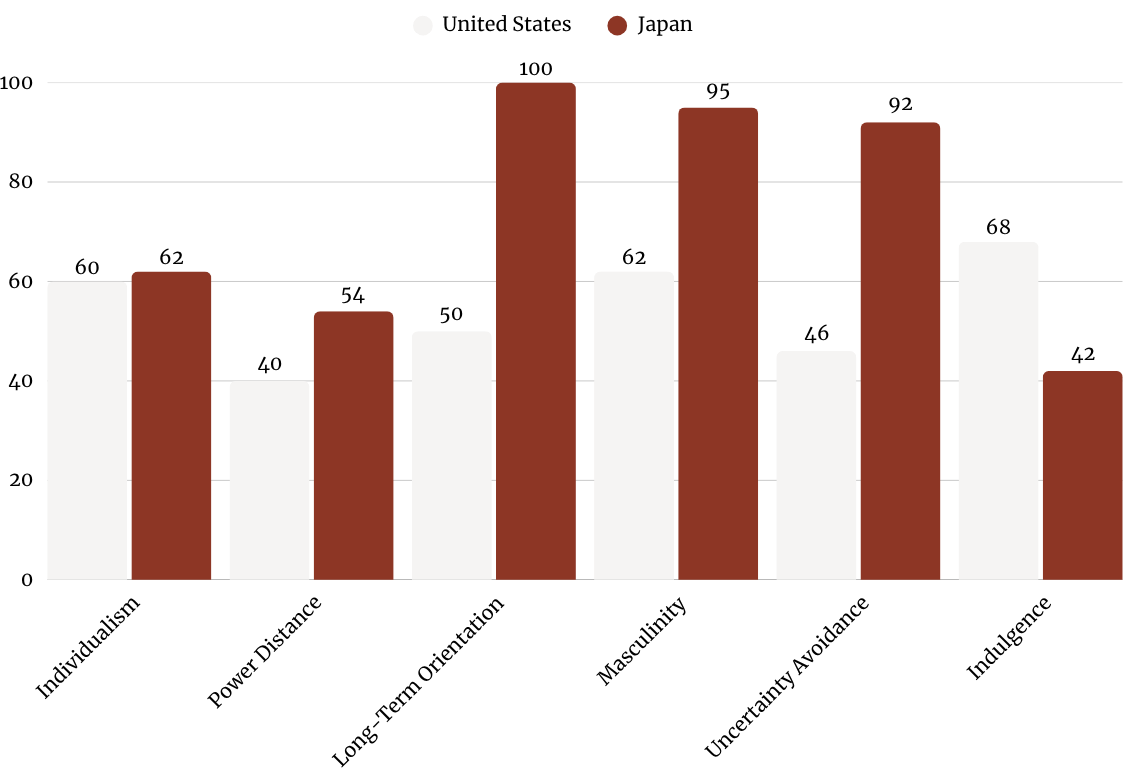
Hofstede’s Dimensions
The Ask
Build an international advertising strategy that earns Fairfield by Marriott cultural relevance among Japanese domestic travelers.
The Problem
Japanese travelers had ryokans for the soul and business hotels for the price. Fairfield was neither.
Client/Brand Background
Fairfield by Marriott is a mid-scale hotel brand under Marriott International with 31 locations across Japan.
The Insight
Fairfield wasn't losing on price or location. It was losing on belonging.
The Opportunity
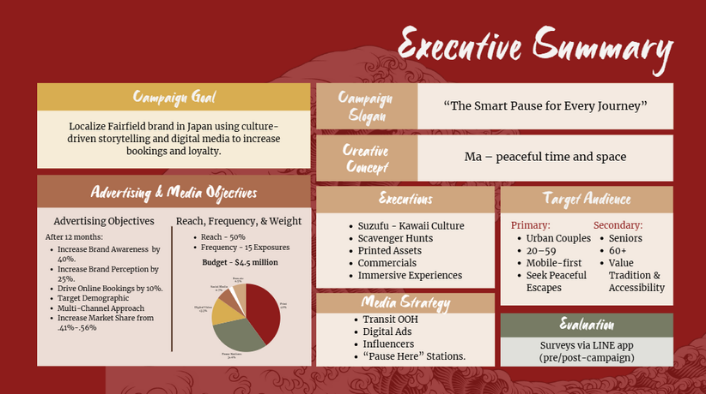
Localize the Fairfield brand in Japan using culture-driven storytelling and digital media to increase bookings and loyalty.
The Solution
A culturally grounded campaign built around Ma, activated through a brand mascot, city-wide scavenger hunts, and media that felt native.
Related Work
Suzufu the brand mascot, Pause Stations, social media scavenger hunt, TV commercial, radio, and a full media plan.
Conclusion
Every execution lived inside one idea. The Smart Pause for Every Journey.
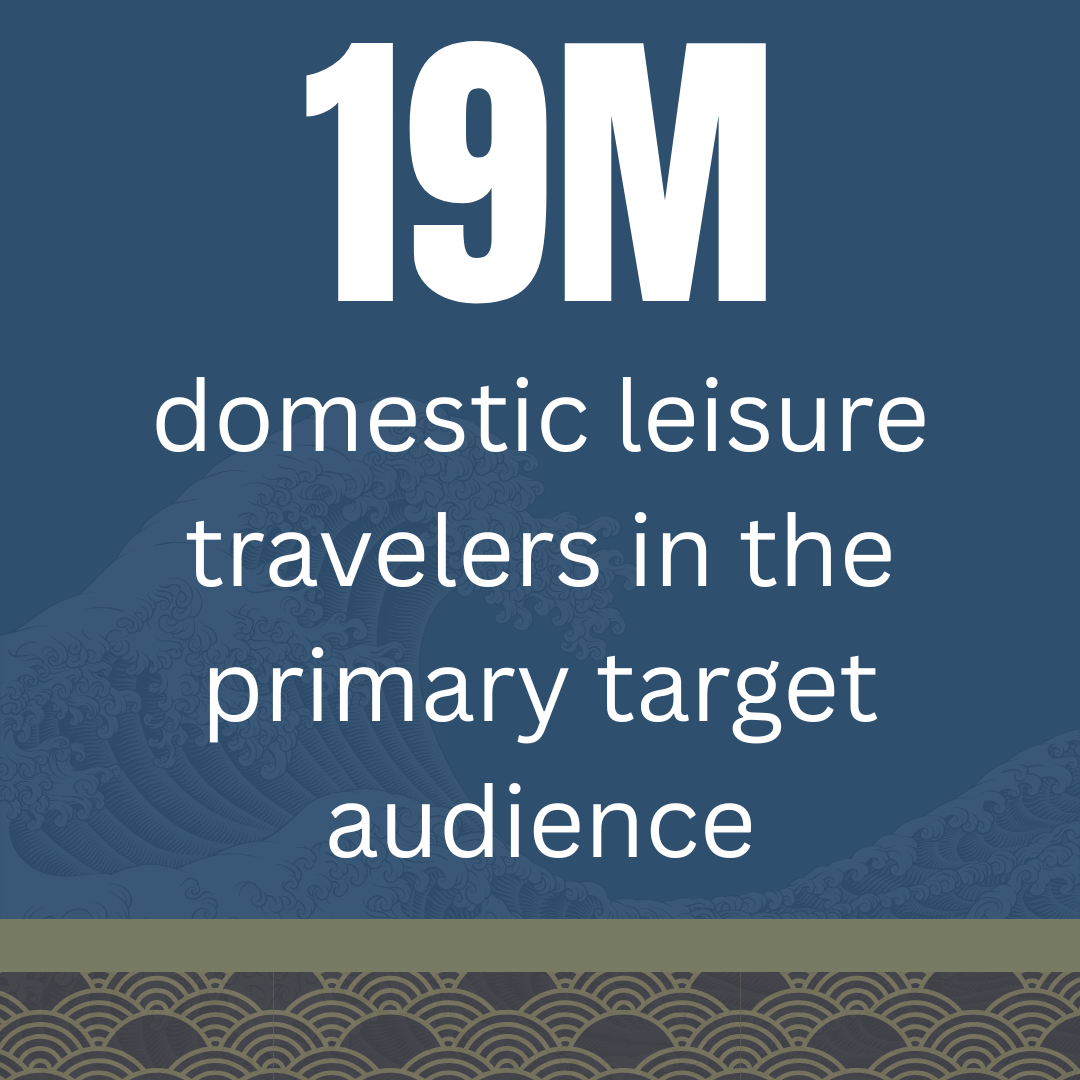
Japan's domestic travel market is significant, growing, and culturally specific.
THE RESEARCH
Low Brand Awareness
Most respondents had stayed at Marriott properties internationally but had never chosen Fairfield in Japan.
Insight #1 - Fairfield by Marriott has low brand awareness and loyalty among Japanese respondents
Several had stayed in Marriott properties abroad but chose ryokans or business hotels when traveling domestically. Japan's uncertainty avoidance score of 92 explains why. Consumers default to what is familiar and culturally legible. A Western brand with no Japanese identity gave them no reason to take the risk.
Insight #3 - Ryokans are preferred for relaxation; business hotels for price and location
Ryokans won on cultural depth. Business hotels won on price and convenience. Travelers knew exactly what each option offered and chose accordingly. Fairfield fit neither. Japan's indulgence score of 42 reflects a culture that does not spend loosely. Every yen on accommodation is weighed against what it costs elsewhere in the trip.
THE MARKET
Strong Local Alternatives
Ryokans won on cultural experience. Business hotels won on price and location. Fairfield wasn't competing on either front.
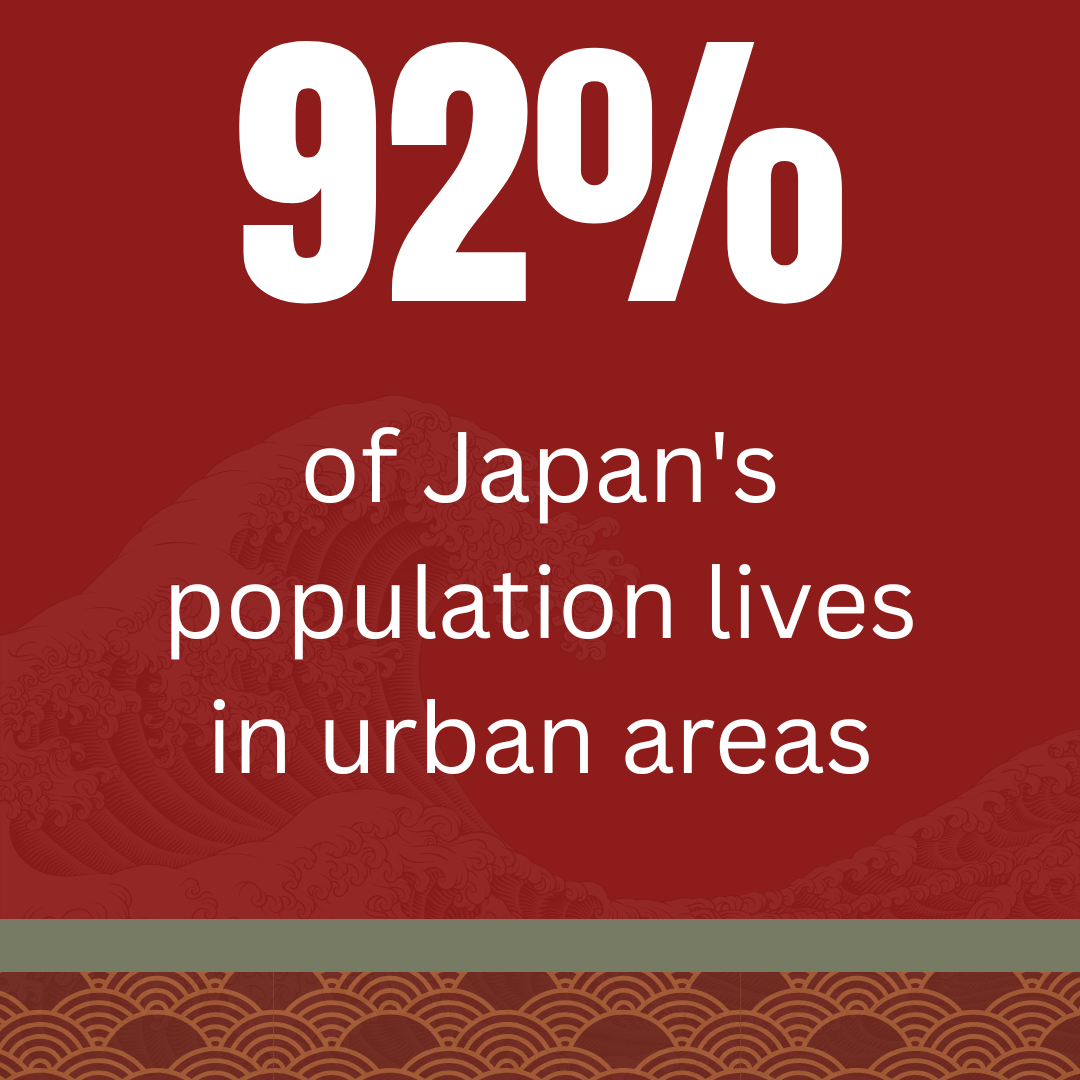
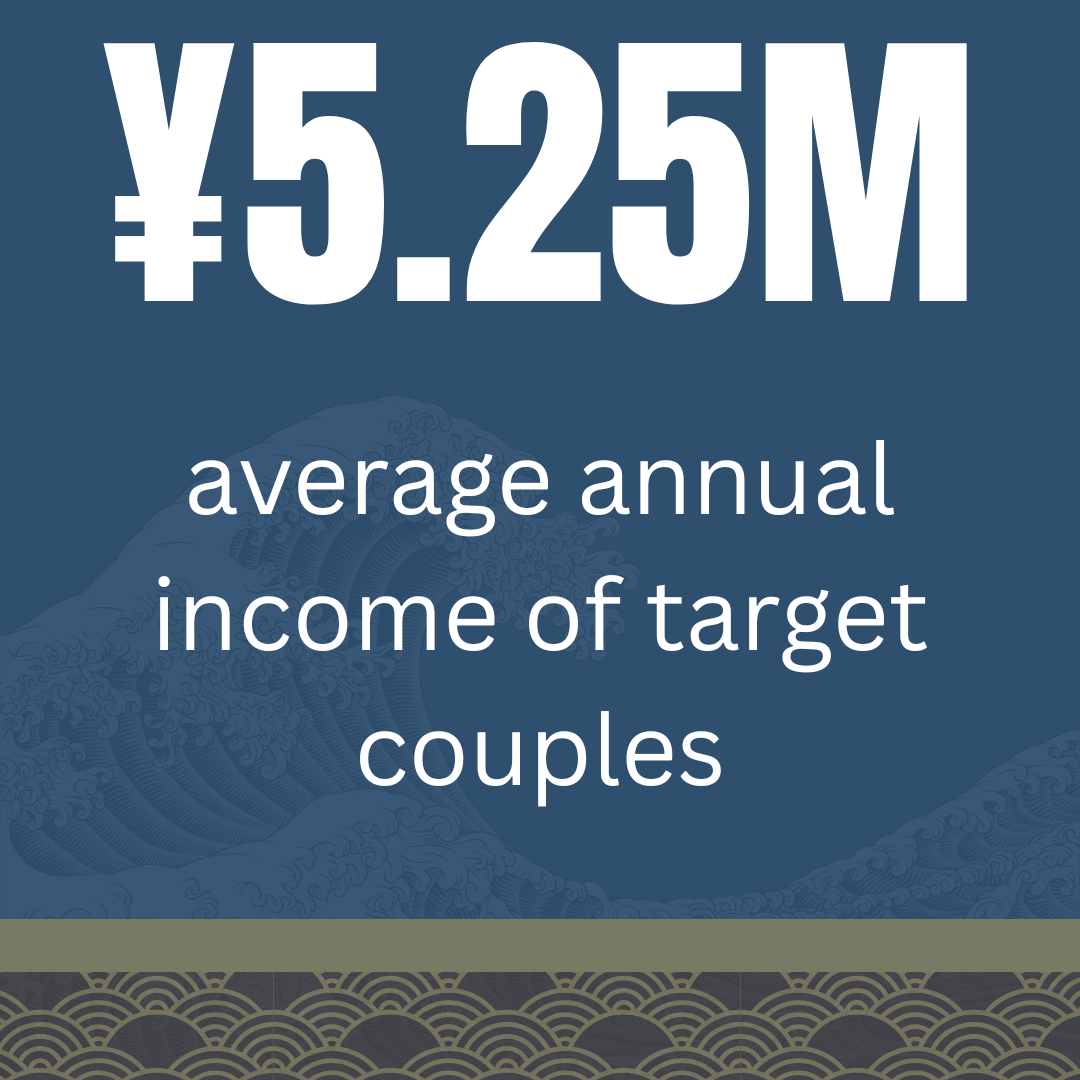
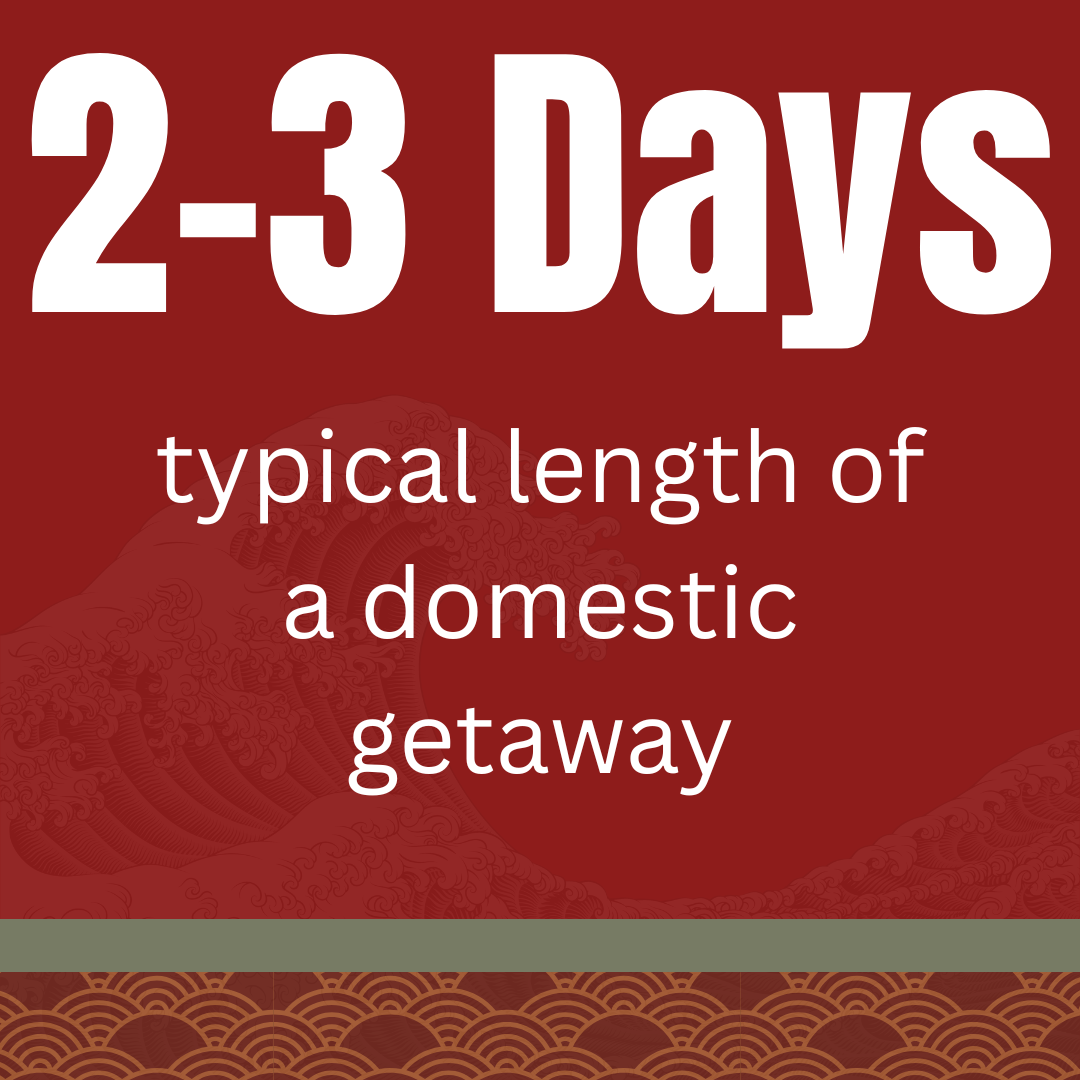
123 million people. 92% urban. Concentrated in Tokyo, Osaka, Nagoya, and Sapporo. The average urban couple earns around 5.25 million yen annually and takes short domestic getaways, typically 2 to 3 days, 1 to 4 hours from home. They seek nature, rest, and cultural depth. They book on mobile first.
The hospitality market they travel into is competitive. Ryokans dominate the leisure segment through tradition and cultural authenticity. Budget business hotels dominate on price and convenience. International brands like Fairfield sit in the middle, present but without a clear reason to be chosen.
Japan's cultural profile defines exactly why that middle ground is so difficult to hold. With an uncertainty avoidance score of 92, Japanese consumers default to brands they already recognize and trust. With a long-term orientation score of 100, they build brand relationships slowly and deliberately. A Western hotel brand entering without a culturally specific identity was not at a disadvantage. It was disqualified before the decision was made.
To understand why Japanese travelers weren't choosing Fairfield, we went directly to the source.
We designed and distributed a survey targeting Japanese respondents, people currently living in Japan, people who have previously lived there, or with direct travel experience in the country. The survey ran from March 17 to March 22, 2025, collecting 20 responses across personal networks and platforms including Facebook, Reddit, Meetup, NextDoor, SurveyCircle, and SurveySwap. Questions covered accommodation preferences, travel behavior, and perceptions of Fairfield by Marriott specifically.
What We Found Was Clear:
THE PROBLEM
Japanese travelers are not indecisive. Ryokans mean onsens, washoku, tatami, and full cultural immersion. Business hotels mean a clean room, breakfast, a walkable location, and money left over for the actual trip. Both options have loyal audiences because both options have a clear identity.
Fairfield had 31 locations across Japan and no identity that Japanese domestic travelers could connect with. Our research confirmed it. Not one Japanese respondent had stayed in a Fairfield in Japan.
Japan's uncertainty avoidance score of 92 means consumers default to what is already familiar and trusted. Japan's restraint score of 42 means accommodation spend is weighed against every other expense in the trip. A Western brand with no Japanese identity and a perceived luxury price point fails both tests before the booking decision is even made.
The product was not the problem. What Fairfield was missing was a reason for Japanese travelers to think of it as theirs.
Ma, the Japanese concept of intentional pause, captured everything our audience was traveling to find.
THE AUDIENCE
Leverage
Urban Japanese couples aged 20 to 59. Financially stable at an average household income of 5.25 million yen, time-poor, and mobile-first. Taking 2 to 3 day getaways, 1 to 4 hours from home. With 49.1% of domestic overnight travelers citing nature as their top goal, this audience was already traveling toward what Fairfield's locations offer. They just weren't choosing Fairfield to get there.
Japan's uncertainty avoidance score of 92 defined what the campaign needed to deliver. Clarity, cultural credibility, and trust. Ma gave Fairfield all three in a single idea.
High uncertainty avoidance → Needs clarity & trust
Mobile-first booking behavior
Responds to subtle, harmonious messaginge
Cultural Considerations:
Four findings shaped everything that came next.
Price Perception
Fairfield was seen as expensive relative to what it offered. Budget-conscious travelers felt the cost wasn't justified.
Insight #2 - Fairfield by Marriott is seen as expensive, making budget-conscious Japanese travelers less likely to consider it.
Respondents associated Marriott with luxury and high cost. That perception extended directly to Fairfield, which priced competitively with business hotels. The product was affordable. The brand signal said otherwise. Japan's long-term orientation score of 100 means perception is built slowly. A misread brand image does not self-correct.
Insight #4 - Domestic trips are usually short getaways a few hours from home.
Respondents traveled 1 to 4 hours from home, typically 2 to 3 days, drawn by nature, seasonal scenery, and cultural experiences. Sightseeing in nature was the top goal for 49.1% of domestic overnight travelers. Hot springs drew 37.3%. Japan's masculinity score of 95, the highest of any country in Hofstede's model, reflects a culture that takes earned rest seriously. These were not impulse trips.
Japanese travelers had ryokans for the soul and business hotels for the price. Fairfield was neither.
SUZUFU — BRAND MASCOT
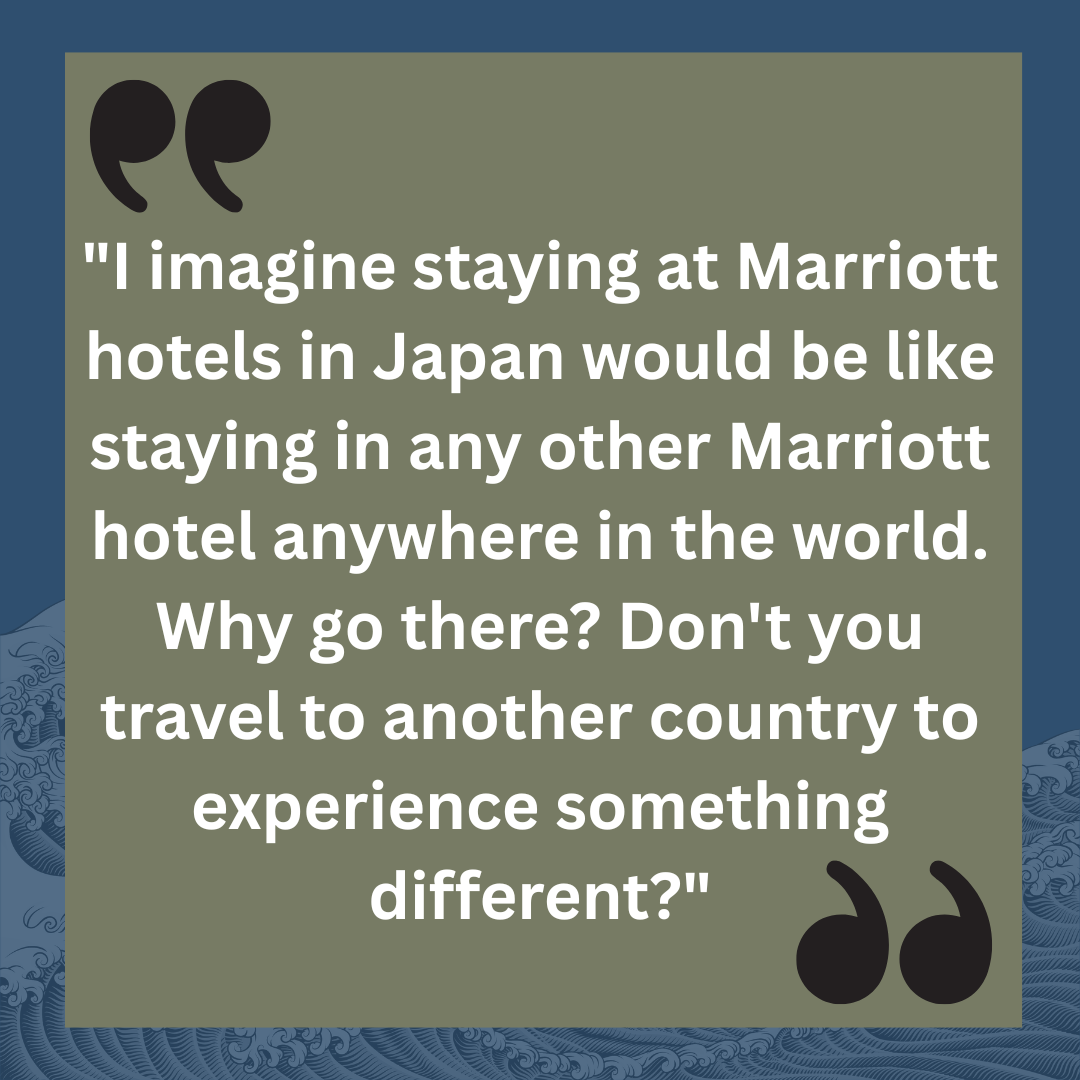
Ma, the Japanese concept of intentional pause, captured everything our audience was traveling to find. No hotel brand had claimed it yet.
Ma describes the restorative space between obligations. The quiet that makes everything else possible. For overworked urban Japanese couples leaving the city for 2 to 3 days, it is not a philosophical concept. It is exactly what they are chasing.
Our research confirmed it. Leisure travel ranked as the most popular trip purpose among respondents. Urban dwellers specifically cited wanting an escape with nature. And when asked why they chose ryokans over international hotels, respondents pointed to cultural authenticity and genuine rest, not amenities or price.
Fairfield was sitting on this opportunity without knowing it.
Fairfield's locations already embodied Ma. The brand just wasn't saying so.
Fairfield's expansion into rural areas near Michi-no-Eki roadside stations placed its properties exactly where Japanese domestic travelers were already headed. Quiet. Accessible. Removed from city life. The SWOT analysis flagged nature-based travel and wellness tourism as Fairfield's biggest growth opportunities in Japan. The product was already aligned. What was missing was a cultural story that connected what Fairfield offered to what Japanese travelers were seeking.
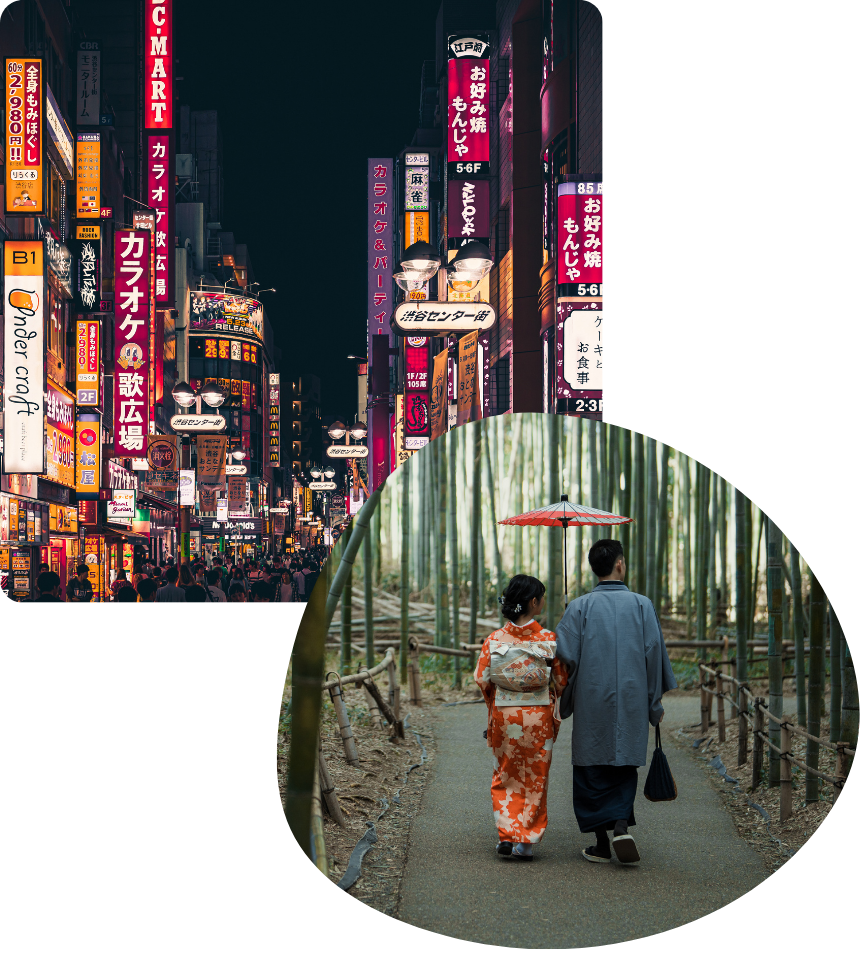

Partner with local travel agencies and Japanese social media influencers to build visibility and trust among domestic travelers
Collaborate
Creative Concept: “Press Pause”
Japan has over 1,500 brand mascots. Cities use them. Transit systems use them. Regional governments use them. They are called yuru-kyara, characters from kawaii culture that build emotional trust without hard selling. In a market where consumers score 92 on uncertainty avoidance, a familiar face matters more than a feature list.
Suzufu is a plump sparrow with large eyes and glasses, holding a key. His name translates loosely to chiming breeze. He is warm, approachable, and distinctly Japanese in aesthetic while representing exactly what Fairfield offers: a key to genuine rest.
For urban couples aged 20 to 59, Suzufu gives Fairfield a personality before a price point. For seniors aged 60 and older, he communicates warmth through a cultural language they already trust. He shows up at Pause Stations, guides the scavenger hunt, anchors the TV commercial, and travels across every social platform.
Pop-up experiences placed at high-traffic transit locations across Tokyo, Osaka, and Kyoto. Each one designed to feel like a Fairfield hotel room or zen spa space. Rotating monthly. Guided by Suzufu.
The stations were unmarked and found by slowing down. That was the point. The experience itself was Ma. A literal pause inside one of the busiest transit systems in the world, branded as Fairfield's.

SOCIAL MEDIA — #FAIRFIELDTREASUREHUNT
Travel Behavior:
Demographic Snapshot:
2–3-day domestic getaways
1–4 hrs from home
Seeks nature, rest, and cultural depth
THE OPPORTUNITY
Couples aged 20–59
Urban dwellers
¥5.25M average income
Time-poor, financially stable, open to travel
Establish Fairfield by Marriott as a value choice for hardworking urban couples seeking a short, restorative, and culturally meaningful escape from daily stress.

Reposition
Shift Fairfield from overlooked Western import to accessible, value-driven choice for Japanese domestic travelers
“The Smart Pause for Every Journey.”

Use guerrilla marketing at high-traffic transit locations to create cultural buzz through immersive experiences
RADIO — DAYPARTING STRATEGY
Pause Passport
Collect stamps at each station, unlock rewards and booking discounts
Mini Scrolls
Mindful prompts and local recommendations to take home
Hidden Scrolls
Secret finds for the observant traveler
Feather Notes
Clues, riddles, and rare golden feathers hidden throughout
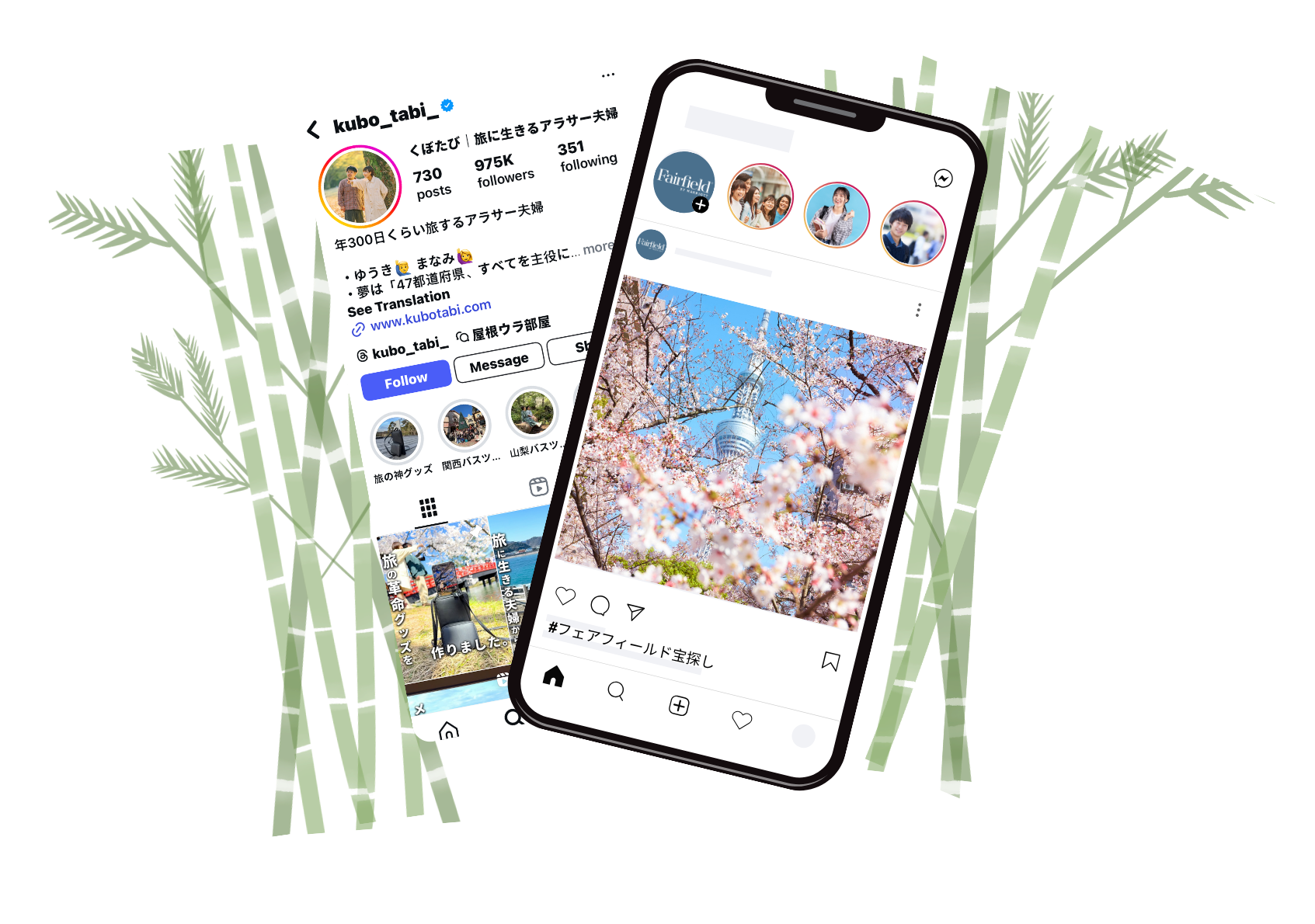
The scavenger hunt extended online through Instagram, Facebook, and LINE. The hashtag #フェアフィールド宝探し (#FairfieldTreasureHunt) drove user-generated content and organic discovery. Influencer partnerships with Japanese travel creators amplified reach among urban couples aged 20 to 59.
LINE for the older demographic. Instagram and Facebook for the younger. Every post connected Fairfield to the feeling of Ma without stating it directly.
THE STRATEGY

Localize
Incorporate traditional Japanese elements and concepts into every touchpoint so the brand feels earned rather than exported
Built on Ma, the Japanese philosophy of intentional restorative space. Expressed through two visual languages that Japanese consumers already respond to: iyashi, the aesthetic of healing and calm rooted in Japanese culture, soft light, quiet movement, unhurried imagery, and yuru-kyara, the kawaii mascot tradition used by over 1,500 brands and institutions across Japan to build emotional trust across all age groups.

PAUSE STATIONS — IMMERSIVE EXPERIENCE
TV COMMERCIAL — PRESS PAUSE
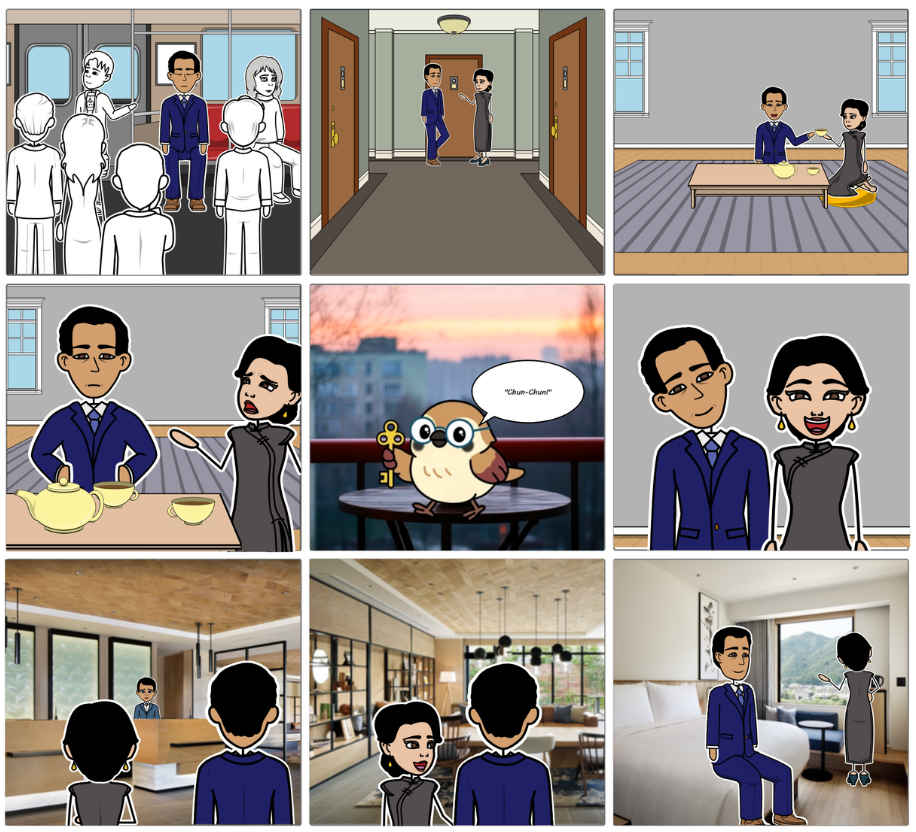
A man comes home to his apartment. He and his partner reconnect over tea. They talk about work pressure, family stress, the weight of the week. They think about getting away.
Then a gentle breeze. A quiet chirp. Suzufu appears on the balcony.
The ad closes on a Fairfield property. Calm. Clean. Earned.
The dual-earner couple reflected the primary audience directly. The iyashi aesthetic, soft light, quiet movement, unhurried pacing, built the emotional tone of Ma before the hotel ever appeared on screen. Suzufu's arrival was not a hard sell. It was a quiet invitation. The ad showed what rest could feel like and let the audience draw their own conclusion.
Airing during morning commutes and evening drives, when urban Japanese couples are most open to the idea of getting away.
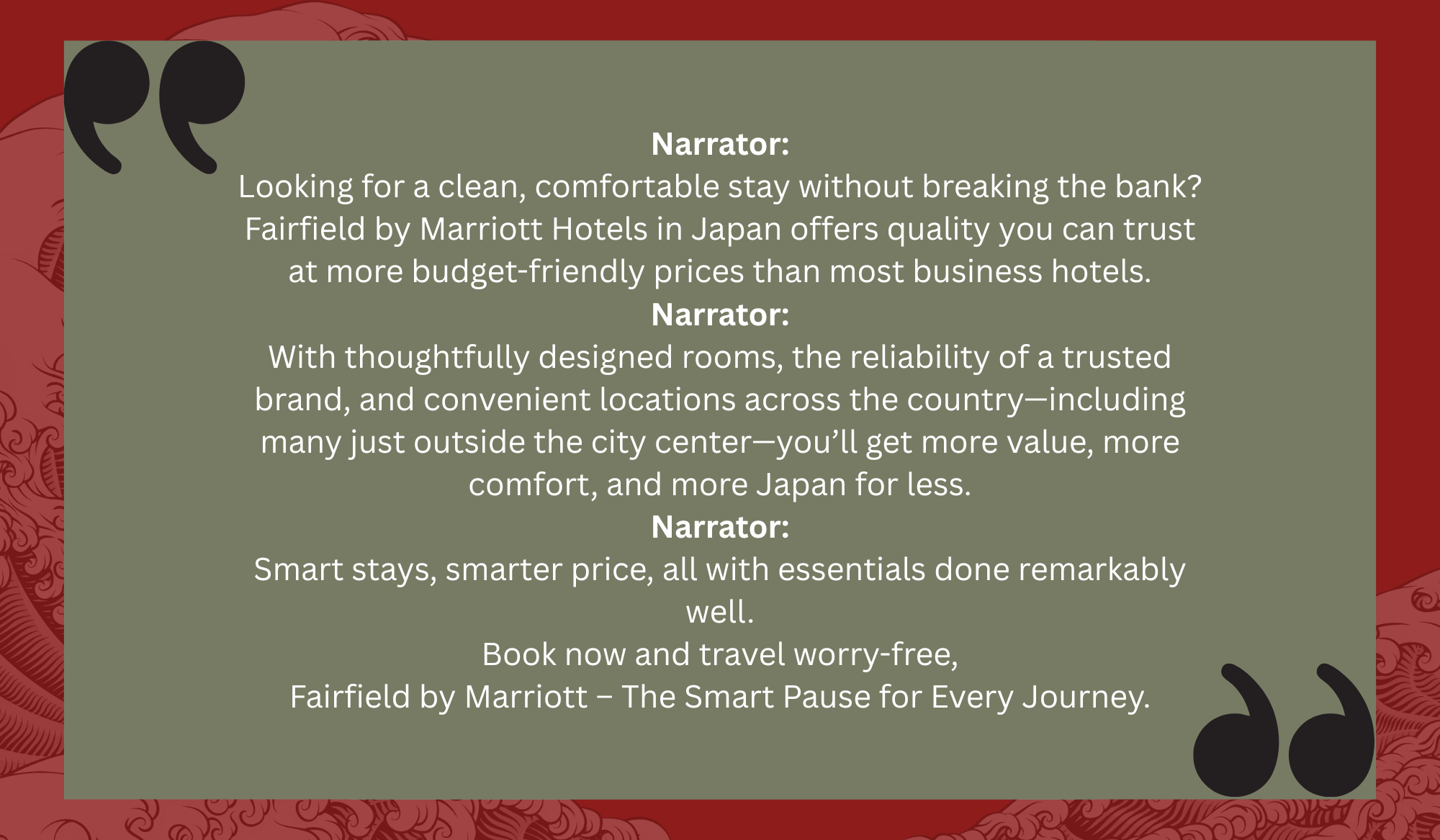
Radio Script
Five themes pulled directly from the research: value, quality, comfort, convenience, reliability. These were the exact attributes Japanese business hotel users cited when explaining why they chose familiar local options over international brands. The radio spot met them on their own terms and reframed Fairfield as the smarter choice.
THE TEAM
Michelle
Irina
Kayla
Samantha
Lisa
Joseph
COM4040 International Advertising · Appalachian State University · Spring 2025
Tools and Skills Used:
Consumer Insights · Cultural Research · Audience Analysis · Strategic Recommendations · Primary Research · Survey Design · Secondary Research · SWOT Analysis · Market Research · Competitive Analysis · International Advertising Strategy · Creative Strategy · Media Planning · Cross-Cultural Communication