Tiffany Temptress Accident Response Case Study: Celebrity Crisis Management & Brand Protection
The Ask
Develop an ethical response strategy for a celebrity client whose reputation, endorsement contract, and future representation were threatened following a highly publicized automobile accident.
The Problem
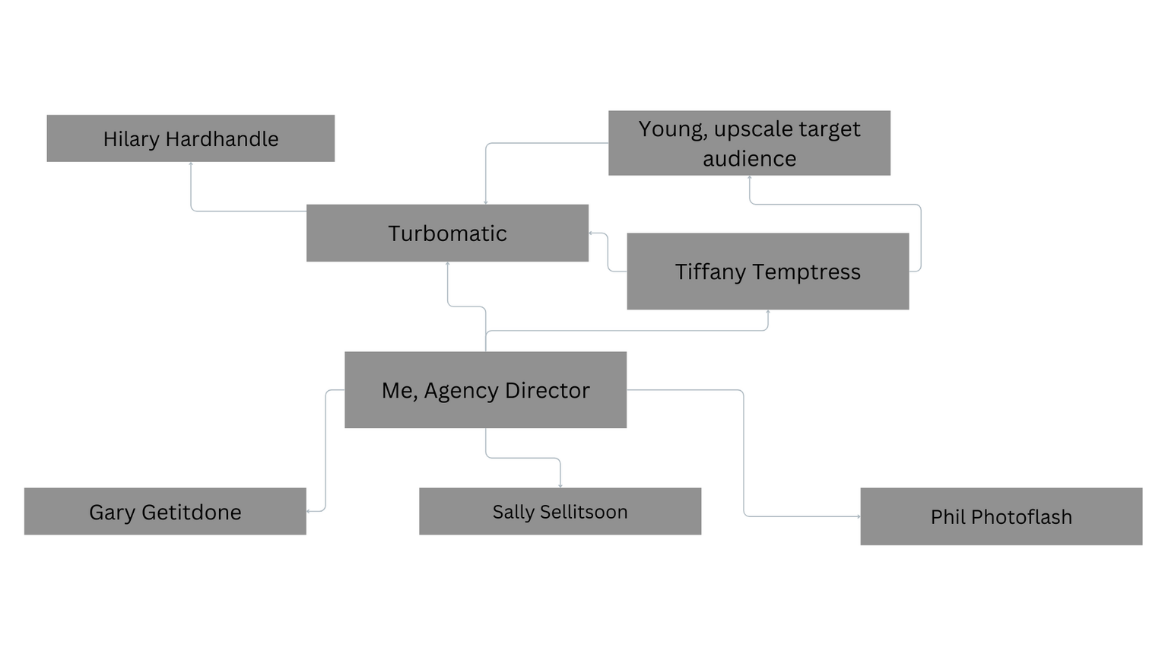
Tiffany Temptress, one of Hotshots Talent's top clients, was involved in a car accident in the Hollywood Hills. News reports claimed drugs and alcohol were found at the scene, placing her reputation and endorsement deal with Turbomatic Hybrid Autos at risk. The incident also created disagreement within Hotshots Talent regarding whether Tiffany should be supported, distanced from, or dropped as a client.
Client/Brand Background
Tiffany Temptress was represented by Hotshots Talent and served as an exclusive spokesperson for Turbomatic Hybrid Autos. Turbomatic marketed itself to a young, upscale audience and relied on brand ambassadors who reflected responsibility and professionalism. The allegations surrounding the accident conflicted directly with the image Turbomatic wanted associated with its brand.
The Insight
The accident itself was not the central issue. The real challenge was determining how Hotshots Talent should respond to a client who had damaged her reputation while still maintaining responsibilities to sponsors, the public, and the client herself. The case required balancing accountability with fairness while considering the impact on all stakeholders involved.
The Opportunity
The situation created an opportunity to demonstrate ethical leadership during a public relations crisis. Rather than focusing solely on protecting reputations, the agency could address the issue through accountability, transparency, and responsible decision-making while preserving important business relationships.
The Solution
1. Preserve the Endorsement
I recommended negotiating with Turbomatic to keep Tiffany as an endorser while temporarily reducing her public appearances. This recommendation was based on Kantian ethics and the belief that people should not be discarded simply because they become inconvenient. While Tiffany's actions created legitimate concerns, Hotshots had already committed to representing her and had a responsibility to help address the situation rather than immediately sever ties.
2. Require Accountability
I recommended that Tiffany publicly acknowledge the incident, issue a sincere apology, participate in community initiatives, advocate for safe driving, and pursue rehabilitation if necessary. This recommendation was based on Aristotle's virtue ethics. Rather than defining Tiffany by a single mistake, I focused on whether she was willing to demonstrate responsibility and personal growth through her actions. If she failed to make meaningful progress over the following year, her future representation would be reevaluated.
3. Improve Agency Risk Management
I recommended creating stronger internal policies for handling future client crises. This recommendation was influenced by utilitarian ethics and the AMA Statement of Ethics. The agency's responsibility extended beyond Tiffany and included sponsors, employees, and the public. Clearer policies would help ensure future decisions minimize harm, promote transparency, and balance the interests of all stakeholders.
Related Work
Crisis Communication
Reputation Management
Stakeholder Management
Conclusion
I recommended retaining Tiffany as a client while requiring measurable accountability and improvement. Rather than prioritizing publicity or immediately ending business relationships, the strategy focused on ethical decision-making, stakeholder responsibility, and long-term reputation management. By applying Kantian ethics, virtue ethics, utilitarianism, and the AMA Statement of Ethics, I developed a response plan that balanced the interests of Tiffany, Turbomatic, Hotshots Talent, and the public while creating a clear path toward rebuilding trust.
Final Case Study
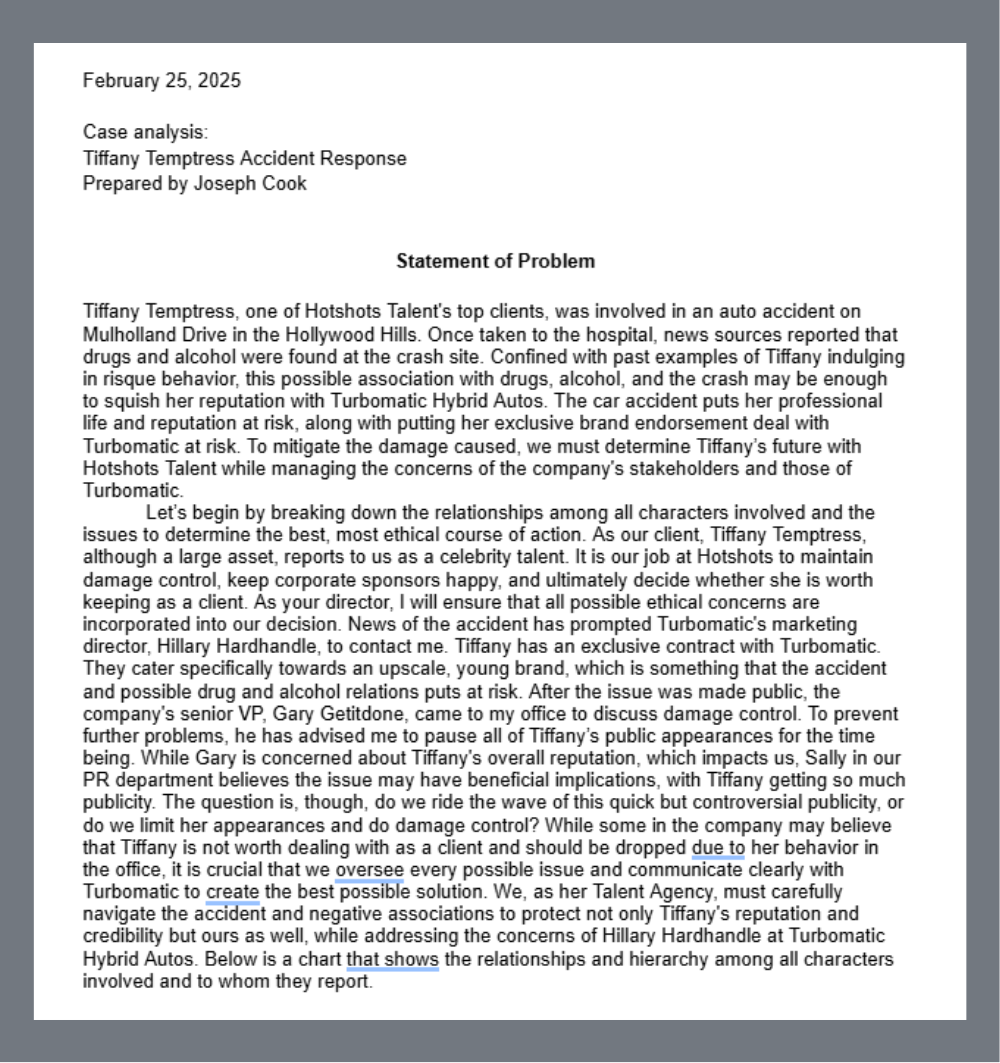
Relationship Chart